
Default Job Posting Templates
Overview
Default Job Posting Templates in Discovered act as your system’s fallback blueprint whenever you create a new job posting. By designating one template as the default, every new job automatically begins with a predefined structure and workflow. This prevents incomplete postings, reduces manual work, and ensures consistency across all your hiring processes.
By rule, Discovered always requires exactly one default template. This safeguard guarantees that no job post is created as an empty shell.
How to Access Default Job Posting Templates:
1. Locate Default Templates
- From the Dashboard, go to Templates → Job Postings.
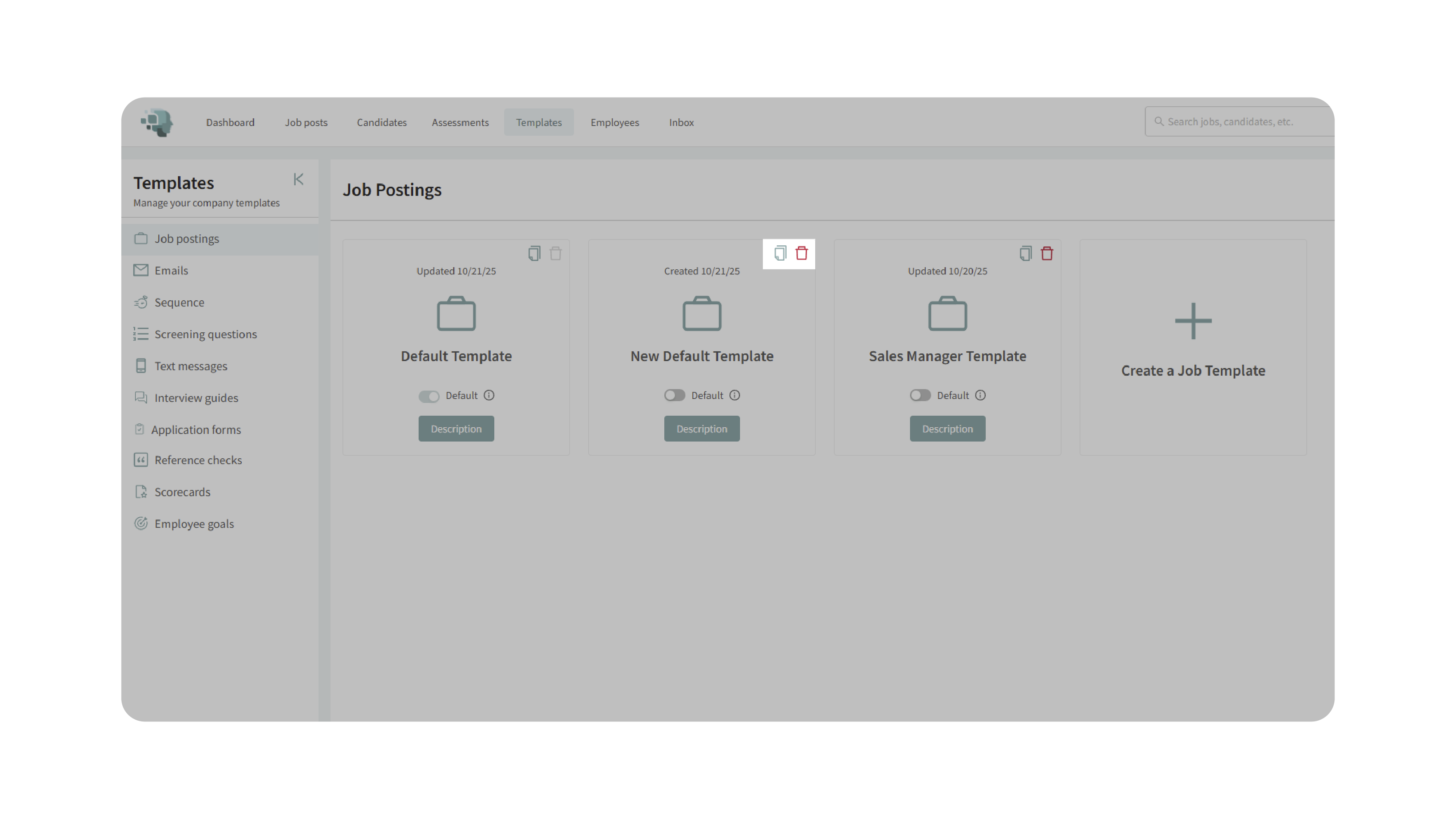
- In the list, look for the template with the Default toggle switched on. This is your current default.
- The default template appears at the top of the list for easy access.

2. How Default Templates Work
- If you click Create a Job Post from the dashboard without choosing a template, the system automatically uses your default template.
- All preconfigured settings—such as workflows, pipelines, and processing steps—load instantly.

3. Change the Default Template
- Go to Templates → Job Postings.
- Find the template you want to assign as the new default.
- Toggle the Default switch on.
- The previous default will automatically be unassigned, and your new default moves to the top of the list.

4. Edit, Duplicate, or Delete Defaults
- You can edit a default template just like any other.
- You cannot delete a default template until another is set as default.
- Duplicating is useful if you want a similar default but with small adjustments.
Why This Matters
Having a default job posting template ensures that:
- Every job starts with a structure – no more empty or broken postings.
- Workflows stay consistent – pipelines and configurations load automatically.
- Time is saved – no need to rebuild standard jobs from scratch.
- Errors are reduced – avoids missing critical setup steps.
Use Cases
- High-volume hiring teams: Create a standard template for recurring roles (e.g., customer service, sales).
- Organizations with strict workflows: Ensure every posting has the correct pipeline applied.
- Agencies: Use a base default template, then duplicate and adapt for clients.
Best Practices
- Always maintain one reliable baseline template as default.
- Review and update your default template regularly to align with evolving workflows.
- Use duplication to test variations without disrupting your primary default.
- Keep names clear (e.g., “Default – Standard Workflow”) to avoid confusion.
What Happens Next
Once set, your default template is automatically applied to every new job created. You can still choose a different template manually, but your default ensures that you’ll never start with an empty or inconsistent posting.
With Default Job Posting Templates, your hiring process stays structured, efficient, and error-free from the very first click.